NZ News Watch
In March 2024, Stuff senior journalist Steve Kilgallon broke a story involving Green MP Darleen Tana, alleging that her husband, Christian Hoff-Nielsen, had exploited a migrant worker.
The reporting triggered a media storm that ultimately saw Tana expelled from Parliament and Hoff-Nielsen’s e-bike business placed into voluntary liquidation.
At the time, the coverage appeared to be a legitimate matter of public interest. However, on 25 October 2024, Kilgallon published a follow-up titled “Owner of bike company at centre of Darleen Tana saga sets up new bike hire business.”
That article felt different — more personal, as if the story had shifted from accountability journalism to something closer to pursuit. Tana had been expelled, Hoff-Nielsen had lost his business, and both were working to rebuild their lives.
A year later, for Hoff-Nielsen, the ordeal had not ended. Recent court proceedings have introduced evidence that casts the earlier narrative in a new light.
Evidence presented in court included an allegation that Kilgallon had previously interacted with Hoff-Nielsen and had been banned from the business premises. If accurate, that prior history could raise legitimate questions about the independence of his subsequent reporting.
Let the evidence speak for itself.
NZ News Watch
Who watches the journalists watching us?
NZ News Watch examines how major media stories are reported — and how narratives evolve once the headlines fade. This year the site focuses on the coverage by Stuff senior journalist Steve Kilgallon of Ex-Green MP Darleen Tana and her husband Christian Hoff-Nielsen.
The purpose of this site is to document the timeline, reporting, and court evidence surrounding the case involving Green MP Darleen Tana and her husband, Christian Hoff-Nielsen, and to provide a clear record for public scrutiny, regulatory review, or legal reference.
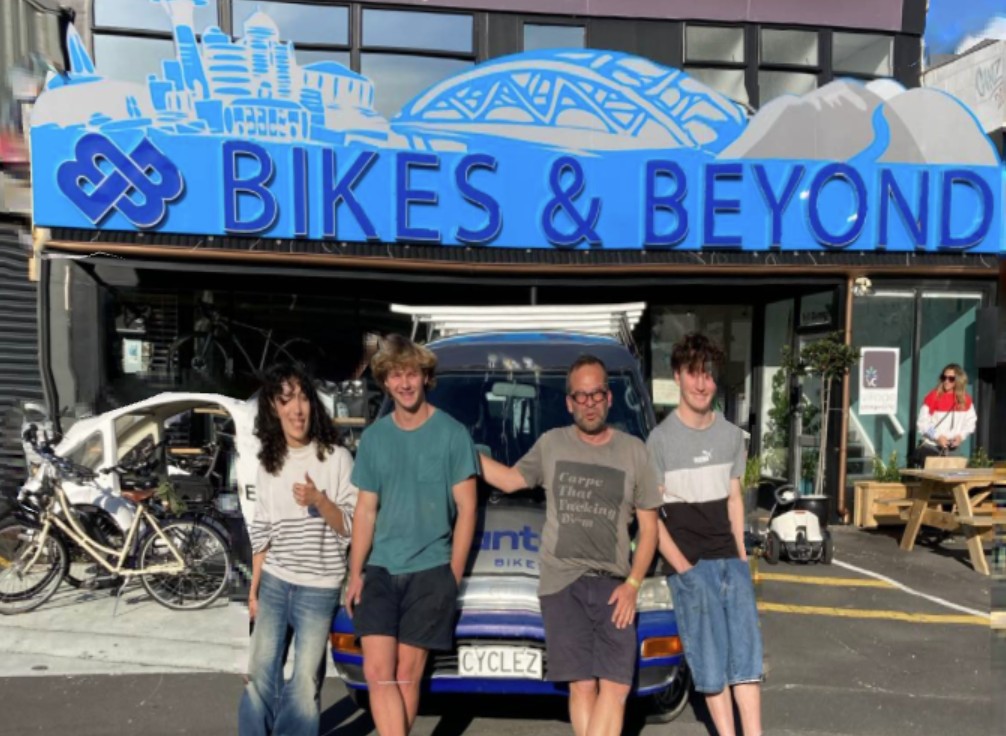
Disclaimer: This site collates publicly available material and sworn evidence relevant to ongoing proceedings and media accountability. All statements regarding individuals are based on information presented in court, in affidavits, in text or email messages, or in published media reports. No allegation is asserted as fact unless proven in judicial proceedings.
Affidavit from [name withheld] a former employee
On ___ day of ____20__, I came to work at my usual time of ____ a.m. to find the front door to my workplace, the Bicycles and Beyond storefront at 9 Clarence Street, Devonport had a bicycle chained to it. I could not get in and open the shop. To get in, I had to destroy the front door [fact check]. I called my boss, store owner Christopher Hoff-Nielsen (“Chris”), who had no idea why the bicycle was there or where to find the key to unlock it.
At about 1 p.m. on the same day, a new customer by the name of Steve Kilgallon called to ask if we had repaired the flat tyre on his bike yet. That was when I learned he had left the key to bicycle chain under the mat of a [____] store across the street. I told him no, and called Chris to ask what to do. Chris told me to ______________, and I informed Steve Kilgallon to come collect his bicycle, with the flat tyre not repaired, and that he was banned from our store. Chris did not know who Steve Kilgallon was, and did not know he was a journalist with Stuff.
Contemporaneous SMS text messages and emails
Copied in full
Key Questions to Examine
-
Was Steve Kilgallon banned from Bicycles & Beyond?
-
Allegations presented in court suggest that Kilgallon had prior interactions with Hoff-Nielsen and was banned from entering the business premises.
-
This is an allegation; it has not been independently verified outside of the court record.
-
-
Were Hoff-Nielsen and/or Darleen Tana convicted of any crime?
-
As of the latest available information, there are no public records indicating criminal convictions against Hoff-Nielsen or Tana in relation to the media coverage or the events reported by Stuff.
-
- Question 3
Note: These questions are included to provide context and guide readers through the factual and evidential record. The site does not assert unproven facts; it documents allegations, court evidence, and public records.
THE ARTICLES
The bike shop, the Green MP, and alleged migrant exploitation
Steve Kilgallon
March 15, 2024 • 9:47am
PARAGRAPH…
TO DO
Step 1: Sequential Listing of Stuff Articles
Instructions for each entry:
-
Include the publication date and byline.
-
Provide a one-paragraph quote of relevance (avoid quoting the full article).
-
Include the link to the original Stuff article.
-
Add a “more” link that goes to a detailed page with PDFs, other media coverage, and subsequent stories in the Herald, NZME, or other outlets.
Example Format
1. March 2024 – Initial Allegation
-
Article: “[Title of Kilgallon’s March 2024 story]” – Stuff, Steve Kilgallon
-
Quote:
“Steve Kilgallon reported that migrant workers alleged exploitation at Hoff-Nielsen’s e-bike business, prompting scrutiny of the Green MP Darleen Tana.”
-
Link: Stuff Article March 2024
-
More: View subsequent coverage
2. 25 October 2024 – Follow-Up
-
Article: “Owner of bike company at centre of Darleen Tana saga sets up new bike hire business” – Stuff, Steve Kilgallon
-
Quote:
“Kilgallon reports that Hoff-Nielsen has launched a new bike hire venture, despite the controversy surrounding his previous business and the parliamentary fallout involving Tana.”
-
More: View subsequent coverage
(Continue for all subsequent Stuff articles.)
Step 2: More Page Structure
On the “more” page, include:
-
The original Stuff article excerpt
-
Include only the paragraph(s) relevant to your timeline; do not copy the full article unless for litigation.
-
Clearly label as: Excerpt for reference only; full article reproduced only with permission.
-
-
Subsequent media coverage
-
NZ Herald, Otago Daily Times, RNZ, Te Ao Māori News, etc.
-
Include publication date, title, byline, short excerpt, and link for each.
-
-
PDF storage
-
Download each article in PDF form and archive locally.
-
Use these PDFs if the original disappears, and for evidence if required in legal or regulatory proceedings.
-
-
Copyright notice
-
Include a clear statement:
-
Under New Zealand copyright law, Stuff articles cannot be reproduced in full without permission. Excerpts are used for documentation and evidential purposes. Full-text reproduction for public access will be requested from Stuff; refusal will be noted.
Step 3: Formal Permission Approach
Once all articles are located and the website is structured:
-
Draft a formal letter/email to Stuff Legal / Copyright Department:
-
Explain your site purpose (documenting media coverage for legal and public accountability).
-
Request permission to reproduce full articles on the website.
-
Note that the site will provide proper attribution and a link to the original.
-
-
If permission is granted, replace excerpts with full articles.
-
If permission is denied, leave excerpts with attribution and note the refusal on the site.
Summary of Workflow
-
List Stuff articles sequentially with date, byline, one-paragraph quote, and link.
-
Create a “more” page that includes excerpts and links to all subsequent media coverage.
-
Archive PDFs of all articles for evidential purposes.
-
Include clear copyright notice and disclaimer.
-
Formally request permission from Stuff to reproduce full articles; note any refusal.